

When a Community Hurts: Processing Trauma Together After a Local Officer-Involved Shooting
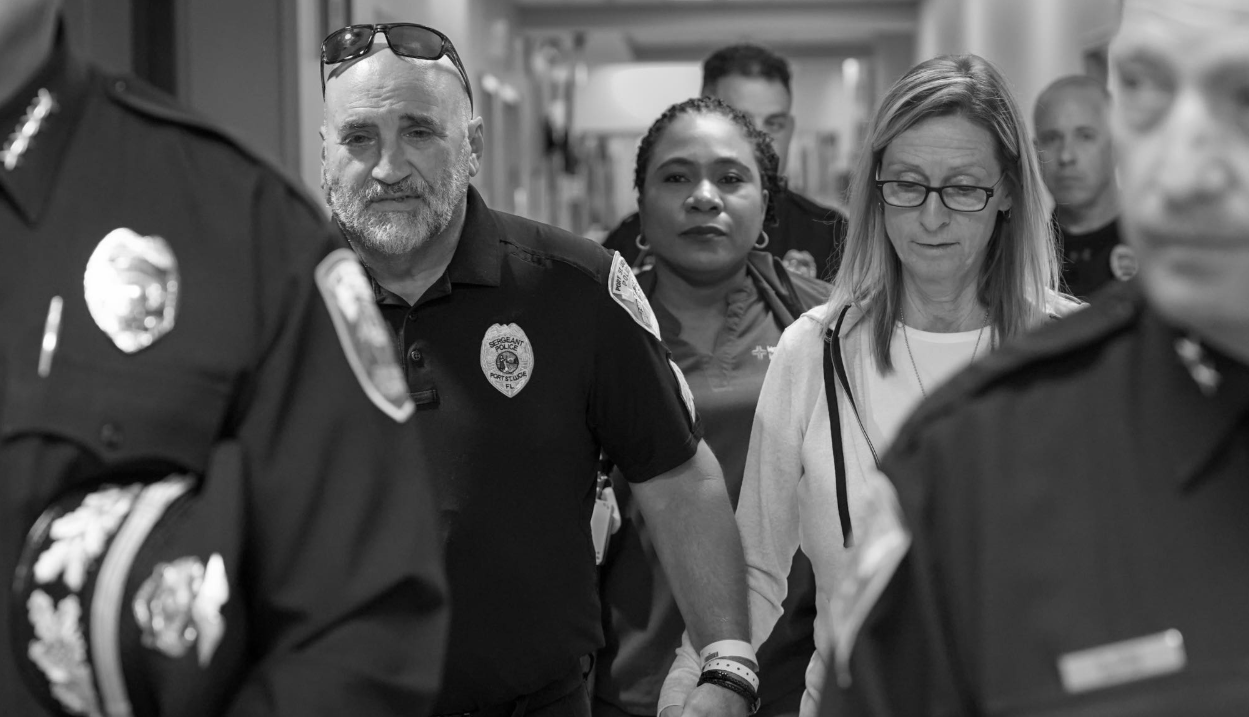
After 37 days in ICU with multiple surgeries, Sgt. Erik Levasseur of the Port St. Lucie Police Department leaves Lawnwood Regional Medical Center alongside his wife and the support of various local law enforcement agencies.
Our Port St. Lucie community was recently shaken by a violent, officer-involved shooting that left a local law enforcement officer critically injured. While the news reports have rightly focused on medical recovery and investigative details, events like this also leave a quieter, deeper impact, one that unfolds in the hearts and minds of first responders, families, neighbors, and an entire community watching closely. For many, the days following brought a mix of emotions: shock, fear, gratitude, anger, relief, and confusion.
These responses are not signs of weakness. They are human reactions to a sudden rupture in our sense of safety and order, especially when the violence touches those entrusted with protecting our community. Moments like this remind us that trauma is not only something experienced individually. It is often collective, shared across relationships, neighborhoods, and conversations that linger long after the headlines fade.
We’re All Facing a Tougher World
Whether it’s violence close to home, ongoing global unrest, or the relentless pace of daily stress, many people are feeling the weight of a world that seems increasingly fragile. Our nervous systems were designed to respond to danger, but when danger feels constant, even indirectly, it can take a toll. People may notice:
Heightened anxiety or vigilance
Difficulty sleeping or relaxing
Irritability, sadness, or emotional numbness
Trouble concentrating
A lingering sense that “something isn’t right,” even when life appears normal
Trauma doesn’t always announce itself dramatically. Often, it shows up quietly: in the body, in relationships, in exhaustion that doesn’t resolve with rest.
How Community Trauma Affects Us Differently
For first responders, events like officer-involved shootings carry unique layers of impact: professional identity, responsibility, moral weight, and repeated exposure to danger. Even when physical injuries heal, emotional processing takes time, and often happens privately. For civilians, neighbors, and families, the impact may look different but still matters. Witnessing violence in one’s own community can shake assumptions about safety and stability, especially when familiar places become associated with fear or uncertainty. There is no “correct” response. What matters is acknowledging that something real has been experienced and that processing it is a healthy, necessary step.
Counseling as a Place to Process, Not Perform
Counseling is not reserved for moments of crisis or diagnosis. It is a space where people can slow down, name what they’re carrying, and make sense of experiences that feel overwhelming or unresolved. After community-wide events like this, people often seek counseling because they:
Feel unsettled but can’t explain why
Are supporting others and neglecting themselves
Notice emotional changes they don’t recognize
Want a place to talk openly without burdening loved ones
For first responders, counseling can offer a confidential environment to process experiences without judgment or pressure—separate from the expectations of strength that often accompany the role. For anyone affected, counseling is less about “fixing” and more about integration, which is learning how to live well in the aftermath of hard things.
Healing Happens Best Together
The ongoing recovery of those directly involved in this incident has been a reminder of courage, resilience, and the power of community support. Emotional healing follows a similar path. It is rarely linear, rarely rushed, and rarely meant to be carried alone. If recent events, locally or beyond, have left you feeling unsettled, overwhelmed, or emotionally tired, you are not alone. Support is not a sign that something is wrong with you. It is often a sign that you are paying attention. At Rise Counseling, we hold space for individuals, families, and professionals as they quietly, respectfully, and at their own pace navigate the emotional realities of a complex world.